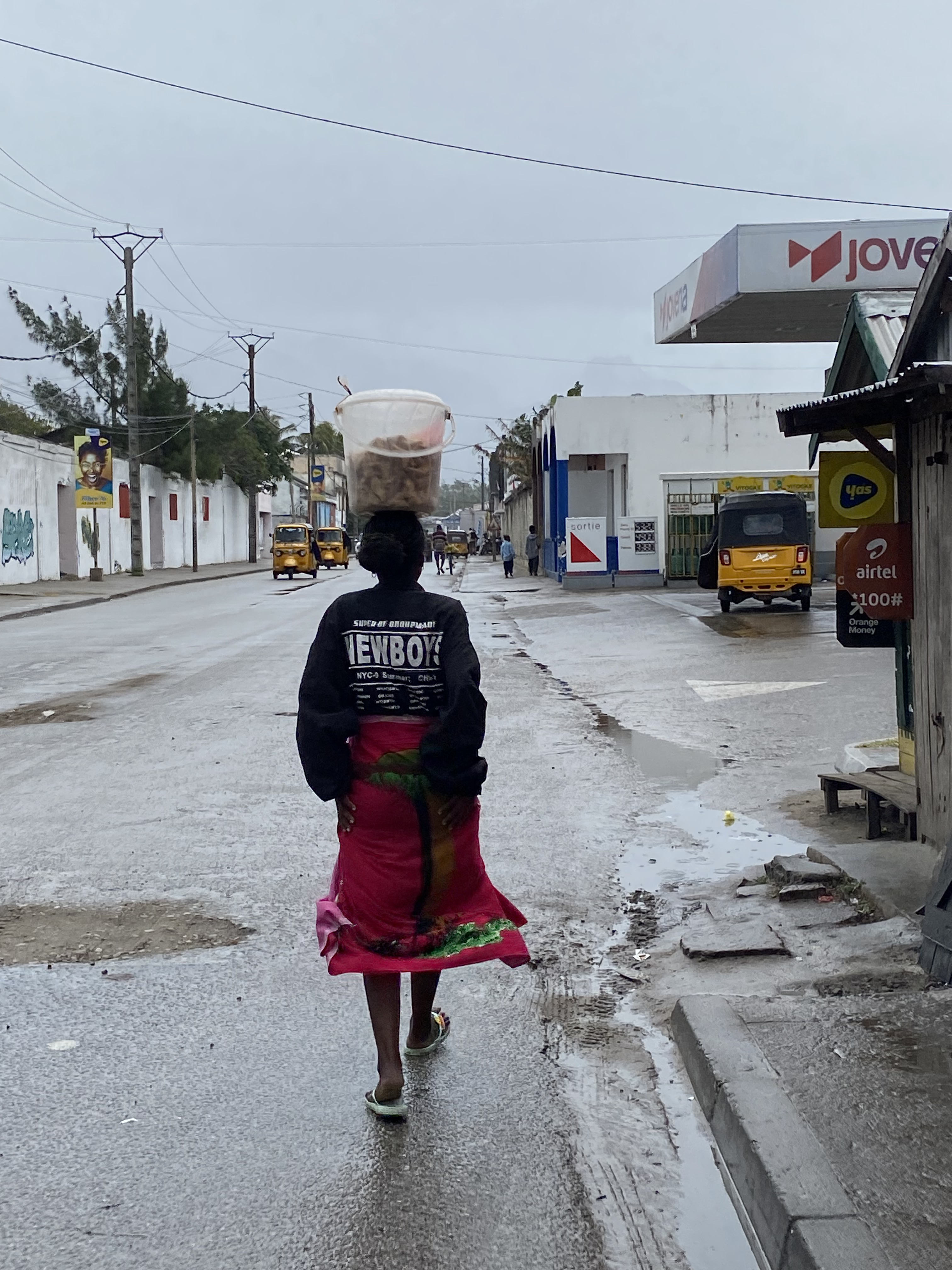
She told me to come to Jesus

“She told me I needed to come to Jesus. So I did. And he changed my life.”

“My friend told me to come with her to church. So I did. Jesus gave me a new life.”

I tend to complicate things. Often, when it comes to techy tasks on my iPhone or computer, my husband or son will interrupt me and say, “You know, if you just…you can accomplish the same task without the hassle.”

I complicate and over think things in many areas of my life.

But after spending a couple of weeks in Madagascar with a group of Christian Malagasy women, I’m beginning to realize that there are things I believed had complicated processes and solutions that now I realize should not be so complicated—I simply made them complicated.

For five days, morning and afternoon, I taught a group of Malagasy women how to use the Bible to counsel themselves and others through difficult situations. I spent a day laying a theological framework for who God is, a day laying a theological framework for what it means to be human—and specifically a woman, a day looking at what causes life’s difficulties and some of the necessary provisions from God that help us through life’s difficulties, a day on how to respond Christianly to life’s difficulties, and, finally, a day discussing specific counseling issues.

I would teach for about 45 minutes, then provided the ladies opportunities to discuss and apply what I taught to real life situations. Once they had time to discuss, they were supposed to choose a representative to stand and share the counseling implications with the group.

But to my surprise the group share time became a testimony time.

As the women began sharing to the larger group, I realized that rather than giving a fictitious example of how they could apply the scripture to a counseling situation, the women were sharing how they personally experienced God’s attributes of being omnipresent or loving or their redeemer.

One woman shared that she had been full of shame, but her friend told her to come to Jesus, and he had taken away her shame.

Another woman’s story was that she had been demon possessed, her hands and legs were numb, and her husband was a drunk. Her friend told her she needed to come to Jesus. She said No. Again, her friend continued to tell her she needed to come to church and find Jesus. She finally did. Jesus freed her, healed her, and healed her family. The last Sunday I was in Madagascar I got to see her, her husband, and her family worshiping in church together.

One young woman’s testimony was that she met and married a man, got pregnant, only to find out he was already married with a family. He left her. In her shame and sorrow, she came to Jesus. He took her shame and healed her. As she continued to trust him, she prayed for God to provide her a godly husband. She shared with the group that God answered her prayers, and she is now married to a loving husband.

Another woman was a drunk who thought that she just needed money. Money would solve her problems, but she was so depressed she drank. Then she began to sell the family’s belongings to get money to spend on alcohol. But a friend asked her what she was doing and told her she needed to come to Jesus. She said No. But her friend persisted. She finally went to church with her friend and Jesus changed her life. She shared that she has hope now. She told the group that money wasn’t the answer to her problems. Jesus was the answer.

Story after story. Testimony after testimony. Their need drove them to the Solution that didn’t make sense to them. Their need drove them to Jesus. But then Jesus’ presence in their lives changed everything.

It was so simple. It was honestly mind-blowing and strengthened my faith as I listened to their stories each day.

So I want to share some of my take-aways from my time with these wonderful women.

1. Let your need drive you to Jesus. Come to him.

Most of the women I met had a physical, emotional, or relational need. Some tried to solve their problems in different ways. But they came to the end of their attempts with nothing. Then a friend came along and told them they needed to come to Jesus for the solution to their problem. Their need pushed them to Jesus. And that’s when everything changed.

There are several situations in Luke 5 in which people’s physical needs push them or their friends to seek Jesus for a solution. In one case Jesus simply offers the solution without being sought.

Luke 5:1-11 Peter, James, and John had been fishing all night and caught nothing. Jesus borrows their boat to use as a speaking platform, teaches the crowds, and then when he finished, Jesus tells them to put their nets into the water. Reluctantly, they obeyed, and they nets were filled with fish. In amazement and worship, Peter responded, “Go away from me because I am a sinful man, Lord?” Jesus asked them to follow him and they do.

Further into Luke 5 a man with leprosy comes to Jesus for healing and Jesus does it.

And then we get to Luke 5:17-26 where a group of determined friends bring their friend to Jesus because he has a need—he is paralyzed. He can’t get himself to Jesus. His friends bring him.

Coming to Jesus means humbling yourself and confessing you are not enough, but Jesus is.

It means you realize that you need Jesus to take over your life, not simply be part of the solution to your problems.

Coming to Jesus could look like physically going to church and speaking to a minister or going to a Christian friend and telling them you need Jesus.

Or it could look like you kneeling down where you are to pray, asking Jesus to come to you in your need.

Come to Jesus.

2. Don’t make it complicated.

As I listened to the Malagasy women share, one of the things that surprised me the most was how uncomplicated they made things. They didn’t give excuses. They didn’t overthink the need or the solution.

Often you and I complicate life and the solutions with excuses and long routed journeys.

But it doesn’t have to be that way.

The solution could be as simple as doing what Jesus has said in the Bible to do.

The solution could be as easy as coming to Jesus in prayer, in surrender to his will and way for your life.

To some it may sound scary, too costly. The excuses take over and nothing changes.

To some it may sound ineffective, too simple. No attempt is made and nothing changes.

But I heard story after story of women who simply confessed their needs for Jesus and their lives changed as they trusted and obeyed his Word.

In Luke 5:5 Peter does what Jesus told him to do. He was reluctant, but he obeyed.

In Luke 5:12 the man with leprosy had doubts that Jesus would even be willing, but he took a chance, went to Jesus, and confessed, “If you are willing, you can make me clean.” Jesus was willing.

In Luke 5:18-19 friends brought their friend to Jesus; they ran into some complications—the place was crowded, so they took off the person’s roof. That probably cost them time and money to repair, but it was worth it.

Many of us have already trusted Jesus to do the most difficult thing—to forgive our sins and to rescue us from an eternity in hell. So why don’t we believe he can help us financially, heal our broken relationships, or turn our mourning into dancing?

This is the One who spoke to a storm and calmed it (Mark 4:37-41).

This is the One who put crazy amounts of fish into the nets of experienced fishermen who hadn’t caught a thing all night (Luke 5:4-11).

This is the One who died on a cross as payment for your sins (Romans 5:8).

This is the One who rose back to life three days later, proving he was God by disarming Satan by defeating death’s power. (2 Timothy 1:10, 1 Corinthians 15:1-8, 22, 54-57)

Come to Jesus.

3. Jesus is the solution to all our needs.

But you may think, “how can coming to Jesus, which we would consider is a spiritual act, change my physical situation?”

I firmly believe that each of us is an embodied soul, a whole person. We shouldn’t divide ourselves into unrelated physical, emotional, spiritual, mental sections. Each affects the others. The result is that many emotional problems, relational problems, and even physical problems often have spiritual solutions.

Luke 5:17-26 details the story of a paralyzed man declared forgiven by Jesus. Jesus meets the man’s spiritual need, which is the greater need, but less obvious to people. The religious leaders question Jesus’ right and ability to forgive sins. “Who can forgive sins but God?!” True statement, religious leaders. That’s your clue.

Jesus responds, “Which is easier: to say, ‘Your sins are forgiven,’ or to say, ‘Get up and walk’? But so that you may know that the Son of Man has authority on earth to forgive sins” he told the paralyzed man, “I tell you: Get up, take your stretcher, and go home.”

Jesus shows himself as God, the one who has the power over the spiritual realm and the physical realm, by healing the man both spiritually and physically. The result was that people glorified God.

What about you? Why don’t you come to Jesus with your needs, all of them?

What if your greatest need is your spiritual condition, but you stay so focused on your physical needs that you are no better off than the paralyzed man stuck on his mat?

Come to Jesus.

4. Friendship is a catalyst God can use to bring people to Jesus.

The testimonies from the women in Madagascar consistently contained a friend who did the uncomfortable work of confronting them with their need for Jesus.

In the story of the paralyzed man from Luke 5, the paralyzed man has a few friends who know that Jesus is who their friend needs. The friends take action, literally bringing their friend on his mat to Jesus. Jesus sees the friends’ faith and goes to work meeting the paralyzed man’s needs.

I don’t know all the theological implications of this interesting chunk of scripture, but I do know that God changed this man’s life because friends positioned him to meet Jesus. And that’s all I need to know.

God puts people in your life and in my life who need to know that Jesus can meet their needs. And we just need to be faithful to tell them, “You need to come to Jesus.”

Who are the people in your life who need to hear you say, “Come to Jesus”?

I think I may have come away more changed than the women I went to minister to in Madagascar. I hope my take-aways will benefit you as well.

I need the simplicity of the Gospel of Jesus Christ.

I need the all-encompassing power of the Gospel of Jesus Christ.

I need to be a good friend and invite you to come to Jesus.

His presence changes everything.

Come to Jesus.

A Tribute To Our $20 Dog

Rylee was so ugly that he was cute. Rylee had a bark that was heard for miles. Rylee was our $20 dog.

I’m not an animal person. It’s not that I don’t like animals; it’s just that I don’t have time to care for animals, and I don’t want to take the time to invest in animals. I’d rather take care of and invest in humans.

But for the past 8 years I’ve cared for and lightly invested in Rylee. Rylee was our puggle—part pug and part beagle. My husband picked him out from an internet listing at a local dog shelter and our middle son prepared to spend $80 of his own money to purchase him, but that week he was in luck! Rylee was on sale for $20! It would be the best $20 our son spent.

There were plenty of aggravating things I can tell you about Rylee. He was tenacious; if he wanted something, he would bark until he got it or the neighbors called the police (true story).  He pooped big and a lot. His appetite for eating any type of white napkin or Kleenex left plenty of messes. He mastered the art of escaping out the back gate.

But as I reflect on his life, there are plenty of worthy things I can say about Rylee. He greeted everyone with enthusiasm. He would look at you as if to say, “You exist! And I am delighted to know you.” He forced you to be a better person and show him some affection by putting his head under your hand and nudging it so you would pet him. For my sons, he was a listening ear, a faithful companion, and a giver of affection on difficult days. Rylee forced you to love, to care, to be unselfish.

A couple of weeks ago Rylee’s health rapidly declined, he stopped eating, and when it was apparent that he was not going to recover, we made the difficult decision to put him down. Yet even in those lasts days as he was ill, when one of us walked into his room to attend to him, he would gather his strength to wag his tail. He lived to show love to his people.

God can use all of life’s moments to teach and shape us, so I shouldn’t be surprised that he used the life and death of our family dog to give me an example of how to live in the service of my Master. If my dog can joyfully exist simply to love me, if he can find happiness just by knowing me, if on his most trying day he can find a way to wag his tail as if to say, “your nearness is my good,” then I can do the same for my Master.

Thank you, Rylee, for teaching me how to be a joyful lover of God.

“But as for me, the nearness of God is good for me;
I have made the Lord God my refuge,
So that I may tell of all Your works.” (Psalm 73:28)

The Days Of Fear Are Over

Photo by Juan on Pexels.com

This Christmas season I have enjoyed a devotional entitled “Joy to the World” with excerpts of Charles Spurgeon’s sermons on the incarnation of Jesus Christ. I’d like to share one that really grabbed hold of me. I pray it grabs you as well!

And in the same region there were shepherds out in the field, keeping watch over their flock by night. And an angel of the Lord appeared to them, and the glory of the Lord shone around them, and they were filled with great fear. And the angel said to them, ‘Fear not, for behold, I bring you good news of great joy that will be for all the people.’”(Luke 2:8-10 ESV)

No sooner did the angel of the Lord appear to the shepherds, and the glory of the Lord shine round about them, than they were afraid. It had come to this, that man was afraid of his God, and when God sent down his loving messengers with tidings of great joy, men were filled with as much fright as thought the angel of death had appeared with uplifted sword.

The silence of night and its dreary gloom caused no fear in the shepherds’ hearts, but the joyful herald of the skies, robed in glories of grace, made them afraid. We must not condemn the shepherds on this account as though they were peculiarly timid or ignorant, for they were only acting as every other person in that age would have done under the same circumstances. Not because they were simple shepherds were they amazed with fear, but it is probable that if they had been well-instructed prophets they would have displayed the same feeling; for there are many instances recorded in Scripture, in which the foremost men of their time trembled and felt a horror of great darkness when special manifestations of God were shown to them.

When he heard the voice of the Lord God walking in the garden in the cool of the day, Adam was afraid and hid himself from the presence of the Lord God amongst the trees of the garden. Sin makes miserable cowards of us all. See the man who once could hold delightful conversations with his Maker, now dreading to hear his Maker’s voice and skulking in the grove like a felon, who knows his guilt, and is afraid to meet the officers of justice.

Beloved, in order to remove this nightmare of slavish fear from the breast of humanity, where its horrible influence represses all the noblest aspirations of the soul, our Lord Jesus Christ came in the flesh. This is one of the works of the devil which he was manifested to destroy. Angels came to proclaim the good news of the advent of the incarnate God, and the very first note of their song was a foretaste of the sweet result of his coming to all those who shall receive him.

The angel said, “Fear not.” As though the times of fear were over, and the days of hope and joy had arrived. “Fear not,” These words were not meant for those trembling shepherds only, but were intended for you and for me, and all nations to whom the glad tidings shall come. “Fear not.” Let God no longer be the object of your slavish dread! Stand not at a distance from him anymore. The Word is made flesh. God has descended to tabernacle among men, that there may be no hedge of fire, no yawning gulf between God and man.

–God incarnate, the end of fear,  delivered by Charles H. Spurgeon December 23, 1866.

As I read these words my heart was filled with the joy of hope I have in Christ Jesus.

But I also hold sadness for those who don’t realize that they don’t have to be far off from their good and gracious God, trapped away from him in sinful disconnect.

God has come to us. You don’t have to be weary. You don’t have to make your own way. You don’t have to hide.

Matthew 1:23 says, See, the virgin will become pregnant and give birth to a son,
and they will name him Immanuel, which is translated “God is with us.”

Ephesians 2:13-15 says But now in Christ Jesus, you who were far away have been brought near by the blood of Christ. For he is our peace, who made both groups one and tore down the dividing wall of hostility. In his flesh, he made of no effect the law consisting of commands and expressed in regulations, so that he might create in himself one new man from the two, resulting in peace.

Hebrews 4:15-16 says For we do not have a high priest who is unable to sympathize with our weaknesses, but one who has been tempted in every way as we are, yet without sin. Therefore, let us approach the throne of grace with boldness, so that we may receive mercy and find grace to help us in time of need.

Come to Jesus this Christmas and be in a restored relationship with your Creator.

Whether you need to pray and trust him for the first time or you need to come home to him, don’t delay any longer. The days of fear are over. The days of hope and joy have arrived.

The Death of Death in the Death of Christ

Last summer my teenage sons encouraged me to watch ALL the Marvel Avenger movies. So I squandered away my summer watching superhero movies that had a surprising impact on me.

(SPOILER ALERT) In the movies we meet Thanos (his name is Greek, thought to be a shortened name forAthanasios, meaning “immortal” or from Greek mythology, the god Thanatos who took people to the underworld.) Thanos gathered 6 stones that basically gave him all the power in the universe and with that power, the ability to send people into oblivion with the snap of his fingers, and he does so. With the snap of his finger, 50% of life in the universe flakes away into death. It was heart-wrenching.

In Endgame all the superheroes remaining devised a risky plan to undo Thanos’ work and destroy him. After what seemed like an eternity of fighting and struggle, in one last hopeless moment, Ironman puts on the gauntlet with the stones, snap his fingers with his last ounce of strength, and done…Thanos, the inevitable picture of Death, flakes away into oblivion. 

It was a glorious moment… And then I remembered it was just a movie. 

I thought to myself, “if I weren’t a Christian and didn’t have the hope of God, I’d be so depressed that it was just a movie, that there are no real superheroes fighting against evil and death.”

Why do we love movies like these? Why do most people love the movies that struggle with good versus evil, and feel triumphant when the hero is victorious? Because deep in ourselves, we know we need a hero. We hope for a savior. 

After the final movie I remembered something my husband asked me to read 18 years ago, before we were even dating. It was John Owen’s introduction to The Death of Death in the Death of Christ. Honestly, the most notable thing that has stuck with me all these years is that title—The Death of Death. I hadn’t considered that death could die, but that would be awesome if it did.

Most people, even Christians, don’t look forward to the process of our bodies dying. We may be at peace with what happens after death, but death is painful for the one dying as well as for those who are left behind. We all know it’s coming. We all know it’s inevitable. For many, it is the worst thing about life. 

Now that we are all depressed, let me share some hope, some truth from God’s word that I have been looking at as I pondered the topic of Jesus Christ’s death on this Good Friday, the death of Death, and my own death:

Jesus’ Death

1 Corinthians 15:3-8 For I passed on to you as most important what I also received: that Christ died for our sins according to the Scriptures, that he was buried, that he was raised on the third day according to the Scripturesand that he appeared to Cephas, then to the Twelve.Then he appeared to over five hundred brothers and sisters at one time; most of them are still alive, but some have fallen asleep. Then he appeared to James, then to all the apostles. Last of all, as to one born at the wrong time, he also appeared to me.

Acts 2:23-24 “this Jesus, delivered up according to the definite plan and foreknowledge of God, you crucified and killed by the hands of lawless men. God raised him up, loosing the pangs of death, because it was not possible for him to be held by it.

Jesus’ death—It happened, and then he came back to life. Why does this matter? For you and me to have our broken relationship with God fixed—reconciled—we have to address our sin. But there is nothing we, in ourselves, can do about our sin! We are all doomed to death and an eternity in hell. BUT, God, being rich in love (because he is love 1 John 4:7-9) made a way to mend our relationship through Jesus Christ. Jesus lived perfectly, without sin. Then, taking our punishment for our sinfulness upon himself, he died in our place on a cross, to pay for the sins of the world. He died for you and me—2 Corinthians 5:21 says, “He made the one who did not know sin to be sin for us, so that in him we might become the righteousness of God.” Because of his humanity, Jesus was able to die in our place.  Because of his deity, he could conquer death. This is what Good Friday commemorates. It is good news for humanity.

Death’s Death

2 Timothy 1:9-10 He has saved us and called us with a holy calling, not according to our works, but according to his own purpose and grace, which was given to us in Christ Jesus before time began. 10 This has now been made evident through the appearing of our Savior Christ Jesus, who has abolished death and has brought life and immortality to light through the gospel.

James 1:13-15 explains the birth of death and then reminds us in verses 16-17 that only what is good comes from God. “13 No one undergoing a trial should say, ‘I am being tempted by God,’ since God is not tempted by evil, and he himself doesn’t tempt anyone. 14 But each person is tempted when he is drawn away and enticed by his own evil desire. 15 Then after desire has conceived, it gives birth to sin, and when sin is fully grown, it gives birth to death.16 Don’t be deceived, my dear brothers and sisters. 17 Every good and perfect gift is from above, coming down from the Father of lights, who does not change like shifting shadows. 

Death’s death – Death exists because of sin, and us humans did that. Romans 6:23 explains that …the wages of sin is death, but the gift of God is eternal life in Christ Jesus our Lord.” Jesus defeats death and wins the victory for us. 1 Corinthians 15:54-56 announces, 54 “When this corruptible body is clothed with incorruptibility, and this mortal body is clothed with immortality, then the saying that is written will take place:

Death has been swallowed up in victory. 
55 Where, death, is your victory?
Where, death, is your sting? 

56 The sting of death is sin, and the power of sin is the law. 57 But thanks be to God, who gives us the victory through our Lord Jesus Christ!”

My Death

Matthew 10:28-31 28 Don’t fear those who kill the body but are not able to kill the soul; rather, fear him who is able to destroy both soul and body in hell. 29 Aren’t two sparrows sold for a penny? Yet not one of them falls to the ground without your Father’s consent. 30 But even the hairs of your head have all been counted. 31 So don’t be afraid; you are worth more than many sparrows.

Hebrews 9:27-28 27 And just as it is appointed for people to die once—and after this, judgment— 28 so also Christ, having been offered once to bear the sins of many, will appear a second time, not to bear sin, but[a] to bring salvation to those who are waiting for him.

2 Corinthians 5: 1-2 For we know that if our earthly tent we live in is destroyed, we have a building from God, an eternal dwelling in the heavens, not made with hands. Indeed, we groan in this tent, desiring to put on our heavenly dwelling,

My death—It’s coming. Somehow and sometime. But just like I prepare for retirement and I prepare for next month, I also prepare for my eternity. I have to make decisions now about what I believe, so I can secure my eternity with God.

The existence of God is most reasonable to me when I consider the other options. And a purposeful Creator who is involved in my life and orders all its details is also reasonable to me when I think about the questions humans are prone to ask about existence, purpose, good, and evil. I believe that purposeful creator is the God of the Bible.

So, I have invested my life learning, knowing, and living for the God of the Bible. I have confessed my need for God, believe that God through Jesus Christ’s life, death, and resurrection gives me forgiveness from sin and the hope of an eternity with him after I die. Even now, I enjoy a relationship with God, peace, wisdom, and so much more.

If you want to know how to have a relationship with Jesus Christ and make plans for your future, see the Scriptures at the end of this post. Push away the distractions. Take time to consider Jesus Christ.

You’re going to die; you can’t defeat death. I’m going to die; I can’t defeat death. Ironman isn’t real; he can’t defeat death. We need a real Savior. He is in the world today. His name is Jesus Christ.

This Easter I pray you take hold of the life Jesus offers through his victory over death!

Scriptures and thoughts on how to begin your relationship with Jesus Christ:

  • Believe that God exists, that he created the world and you, and that he desires a relationship with you. The created world is evidence of God. There is a design to God’s plan that works when we trust him.

Genesis 1:1 In the beginning God created the heavens and the earth.

Genesis 1:26-27 26 Then God said, “Let us make man in our image, according to our likeness. They will rule the fish of the sea, the birds of the sky, the livestock, the whole earth, and the creatures that crawl on the earth.” 27 So God created man in his own image; he created him in the image of God; he created them male and female.

Psalm 139:13-14 For it was you who created my inward parts; you knit me together in my mother’s womb.14 I will praise you because I have been remarkably and wondrously made. Your works are wondrous, and I know this very well.

Psalm 19:1The heavens declare the glory of God, and the expanse proclaims the work of his hands.Day after day they pour out speech; night after night they communicate knowledge.

Romans 1:20 20 For his invisible attributes, that is, his eternal power and divine nature, have been clearly seen since the creation of the world, being understood through what he has made. As a result, people are without excuse. 

Hebrews 11: 1-3, 6 Now faith is the reality of what is hoped for, the proof of what is not seen. For by this our ancestors were approved. By faith we understand that the universe was created by the word of God, so that what is seen was made from things that are not visible.Now without faith it is impossible to please God, since the one who draws near to him must believe that he exists and that he rewards those who seek him.

  • Admit you are a sinner and need a savior. We naturally don’t trust God and don’t want to follow his design. Instead, we sin by trusting other created sinners or ourselves. It never has gone well; you can look around at our world and see proof of that.

Genesis 3:3-7 3 Now the serpent was the most cunning of all the wild animals that the Lord God had made. He said to the woman, “Did God really say, ‘You can’t eat from any tree in the garden’?” 

The woman said to the serpent, “We may eat the fruit from the trees in the garden. But about the fruit of the tree in the middle of the garden, God said, ‘You must not eat it or touch it, or you will die.’”

“No! You will certainly not die,” the serpent said to the woman.“In fact, God knows that when you eat it your eyes will be opened and you will be like God, knowing good and evil.” The woman saw that the tree was good for food and delightful to look at, and that it was desirable for obtaining wisdom. So she took some of its fruit and ate it; she also gave some to her husband, who was with her, and he ate it. Then the eyes of both of them were opened, and they knew they were naked; so they sewed fig leaves together and made coverings for themselves.

Romans 1:25 25 They exchanged the truth of God for a lie, and worshiped and served what has been created instead of the Creator, who is praised forever. Amen.

Proverbs 14:12 There is a way that seems right to a person, but its end is the way to death.

Romans 3:23 23 For all have sinned and fall short of the glory of God;

Romans 6:23 23 For the wages of sin is death, but the gift of God is eternal life in Christ Jesus our Lord.

  • Believe that Jesus died on the cross for you and that he rose again, defeating death and providing salvation from an eternity separated from God.

John 3:16 16 For God loved the world in this way: He gave his one and only Son, so that everyone who believes in him will not perish but have eternal life.

Romans 5:8 But God proves his own love for us in that while we were still sinners, Christ died for us.

  • Repent (turn away) from your sins and selfishness and turn to God, entrusting the leadership of your life into his care.

Acts 2:38 38 Peter replied, “Repent and be baptized, each of you, in the name of Jesus Christ for the forgiveness of your sins, and you will receive the gift of the Holy Spirit.

  • Pray and tell God what you understand about your need for him. Ask for forgiveness. Ask him to be your savior. Invite him into your life. The result is his Spirit coming into your life and beginning to change you. 

Romans 10:9 If you confess with your mouth, “Jesus is Lord,” and believe in your heart that God raised him from the dead, you will be saved.

  • Once you pray and become a Christian, tell someone you know who a Christian about your decision is so they can encourage you along. If you don’t know anyone who is a Christian, contact a Bible believing church in your area. Start learning about your savior by going to a church that teaches the Bible, and by reading the bible (get a hard copy and download a bible app. I like the YouVersion app.) And keep praying; prayer is the way you talk to God.

Hebrews 10:23-25 23 Let us hold on to the confession of our hope without wavering, since he who promised is faithful. 24 And let us consider one another in order to provoke love and good works, 25 not neglecting to gather together, as some are in the habit of doing, but encouraging each other, and all the more as you see the day approaching.

2 Timothy 3:16 16 All Scripture is inspired by God[a] and is profitable for teaching, for rebuking, for correcting, for training in righteousness, 17 so that the man of God may be complete, equipped for every good work.

Philippians 4:6-7 Don’t worry about anything, but in everything, through prayer and petition with thanksgiving, present your requests to God. And the peace of God, which surpasses all understanding, will guard your hearts and minds in Christ Jesus.

Under-Thinking Accountability, Part 1 Necessary Aspects

Photo by Andrea Piacquadio on Pexels.com

Accountability. Sometimes this word is used when calling on an individual or group to be held responsible for certain actions or inactions that have brought about a negative consequence. But personal accountability looks slightly different. It is the need to invite others into one’s life to give accountability in areas of growth.

Accountability is a needed part of spiritual growth as a Christian and, really, anyone’s personal growth, but I must confess that I’ve had my ups and downs with giving and receiving it.

Some of my experiences went something like this: “Hey friend, I have this sin I’m struggling with. You mentioned struggling with something. Why don’t we get together every week and hold each other accountable for doing what we need to do?” We met, asked how things are going, encouraged each other to do better, prayed for each other, and met again the next week. 

A lot of the time there was not much thought put into it. Honestly, I think I hoped simply praying with a friend would supernaturally change me, but I found that accountability doesn’t work that way.

Recently I began thinking about accountability again. I have been running more lately and have decided to train for a few races. On a recent run I asked my husband to join me to improve my pace—it didn’t go well! This experience led me to reflect on accountability in general. In sorting through my own experiences, I have come up with some necessary and important aspects for productive accountability.

Find the right person. Asking the right person to serve as your accountability partner can make or break the journey. You need an accountability partner whom you respect and trust, and ideally, someone who is a part of your daily or weekly life. 

As a teenager, I trusted my mom to love me unconditionally and give me solid counsel; for years she was my #1 confidant. Now it’s my husband. He lives with me and sees my good, bad, and ugly. He wants the best for me, so I share my struggles and he helps me to overcome. 

I care about my teenage sons becoming God-loving and honorable men. My husband and I want to model how to do that to the best of our ability. Over a year ago at Christmas we all agreed to use the YouVersion Bible app to read through the Bible together. From day to day, we could see a check mark by each name to see who completed their reading. There was a place to add questions or comment. We all had days that we got behind, but we were in it together, reminding each other to get back on track. At the end of the year the four of us accomplished reading through the Bible together. We celebrated and chose another plan for this year. 

If you are going to ask someone to hold you accountable, put some thought into it. Choose someone who you trust and respect, who seems to live out the virtues you seek. Secondly, choose someone who is in your life and sees you on a regular basis, so that they can actually hold you responsible for your actions.

Define your terms and expectations. You and your accountability partner need to be on the same page when it comes to what you both mean by accountability and what you both expect out of this relationship. Some people are asking for non-intrusive encouragement—Bible verses and other resources that may help them. Some want straight forward, intrusive questioning coupled with encouragements and resources. Some people need their partner to accept late night calls for help or be willing for more time-consuming accountability such as attending counseling or AA type meetings with them.

I think, when I was younger, if I had a conversation with my accountability partner about accountability expectations I could have grown more. We would have made more beneficial plans, and accountability overall would have been more effective.

Continue to communicate. Continued communication with your accountability partner is key. After your first couple of meetings, reflect on what is working and what needs to be tweaked. Then talk to your accountability partner about it. Work together to figure out if your plan is effective. If there are problems, try to pinpoint the problem and what needs to change. 

I mentioned earlier that I asked my husband for help in improving my running pace, so he did. Before the run he asked how fast was too fast and how slow was too slow. He planned to let me know when I was outside those parameters. As we ran, I was constantly slowing down and speeding up and outside of those parameters, so he let me know. At the end of the run, I was irritated! I thought to myself, “This was a bad idea. I should just run by myself.” BUT I decided to talk to him about the run. It was tense. He said he only did what I asked of him. That was a true statement. We discussed what was frustrating to me, made some adjustments to the plan, and tried running together again. It worked! The original goal was the same, but how he approached helping me was adjusted and I adjusted my attitude to receive his help. We are still running together. I am improving my pace. The plan just needed to be tweaked. 

Acknowledge your own insecurities. Accountability is uncomfortable. Remember, you are inviting someone into your life to hold you responsible for your actions that don’t align with your goals and hold you to actions that do. The nature of the accountability relationship is based on vulnerability and admitting need. So, it is likely you will struggle with pridefulness puffing up to protect you after you have admitted weakness. It is also likely that fear may arise because you’ve risked being vulnerable. It is tempting to back off from the relationship and run. But don’t. Instead, try confronting you’re pride and insecurities. Try telling your accountability partner that you are struggling with insecurities. Don’t let these fears short-circuit overcoming a sin or achieving your goals.

As I mentioned earlier, after running with my husband, I wanted to quit running with him. I didn’t realize how inconsistent my pace was, and how much I slowed down; it was embarrassing. It was also my dear husband pointing it out! But then, I asked him to! I had invited him in, yet I didn’t like it. I had to acknowledge my insecurities, talk to him, and figure out how to make it work.

Take and Give. Accountability is reciprocal. It’s a two-way investment of time and care. If you are seeking accountability and view the other person as the helper or mentor of the relationship, don’t expect them to do all the work of checking in or scheduling to get together. Instead, take the initiative to call them to plan. Text them an encouraging verse. Ask how you can pray for them. Your needs may be different from theirs, but your accountability partner needs prayer and encouragement too.

I’ve been in a couple of accountability relationships where I was the mentor reaching out to check on and encourage the mentee. It was always refreshing for them to ask, “So what’s going on in your life? You are always encouraging me and praying for me. How can I pray for you?” I’ve also had them text me an encouraging Bible verse that was exactly what I needed that day. It’s a give and take relationship.

Accountability is important. Don’t under-think it. If the goal you seek to achieve or the sin you seek to overcome is worth it, seek out the right person, define accountability and expectations, continue to communicate throughout the relationship, acknowledge your insecurities and push forward, and remember, it is a give and take relationship. The accountability relationship has the potential to be one of the most valuable investments of your life.

Scriptures that came to mind as I thought about accountability:

Two are better than one because they have a good reward for their efforts. 10 For if either falls, his companion can lift him up; but pity the one who falls without another to lift him up. (Ecclesiastes 4:9-10)

Iron sharpens iron, and one person sharpens another. (Proverbs 27:17)

The wounds of a friend are trustworthy, but the kisses of an enemy are excessive. (Proverbs 27:6)

24 And let us consider one another in order to provoke love and good works, 25 not neglecting to gather together, as some are in the habit of doing, but encouraging each other, and all the more as you see the day approaching. (Hebrews 10:24-25)

29 Jesus answered, “The most important is Listen, Israel! The Lord our God, the Lord is one. 30 Love the Lord your God with all your heart, with all your soul, with all your mind, and with all your strength. 31 The second is, Love your neighbor as yourself. There is no other command greater than these.” (Mark 12:29-31)

19 My dear brothers and sisters, understand this: Everyone should be quick to listen, slow to speak, and slow to anger, 20 for human anger does not accomplish God’s righteousness. (James 1:19-20)

God Be With You

Photo by Juan on Pexels.com

“And God, just be with them…” These were the words from someone at church who was praying for my husband and I one Sunday morning, and they said that phrase more than once in their prayer—God be with them. That day I started thinking about those words. Were these filler words used when someone didn’t know how to end their prayer? Or did they say those words because they knew that, although they might seem trite, they are really the most powerful request they could have uttered on our behalf?

2020 morphed into a grievous year and that phrase has been ringing in my ears. God be with them. In reflecting upon it, I am left with this question: God is with me, but why does recognizing God’s presence make a difference in my circumstances, even if the circumstances stay the same? 

Below are four passages of Scripture that have helped me work through the significance of recognizing God’s presence in my life.

1. Recognizing God’s presence provides sustaining comfort and peace.

Even when I go through the darkest valley, I fear no danger, for you are with me;
your rod and your staff—they comfort me.

You prepare a table before me in the presence of my enemies;
you anoint my head with oil; my cup overflows.” (Psalm 23:4-5)

Can you imagine coming face to face with a frightful enemy, and saying, “Before you threaten me or whatever it is you plan to do, I’m just going to finish up this burger. Would you like some fries?” Disarming, isn’t it? Recognizing God’s presence in the midst of my fear brings comfort and peace. Maybe it is as simple as knowing there is someone bigger than me, more powerful than me, whose simple presence means peace like a parent laying down with a scared child in the middle of the night. He is there … knowing, working, and sustaining me.

2. Recognizing God’s presence in overwhelming circumstances leads me to a correct view of God, of myself, and the proper worship of God.

So because the Israelites’ cry for help has come to me, and I have also seen the way the Egyptians are oppressing them, 10 therefore, go. I am sending you to Pharaoh so that you may lead my people, the Israelites, out of Egypt.”

11 But Moses asked God, “Who am I that I should go to Pharaoh and that I should bring the Israelites out of Egypt?”

12 He answered, “I will certainly be with you, and this will be the sign to you that I am the one who sent you: when you bring the people out of Egypt, you will all worship God at this mountain.” (Exodus 3:9-12)

Moses was the Hebrew fugitive out of Egypt. Older, wiser, and enjoying a quiet life tending sheep, he saw a bush that didn’t burn up and there encountered God. God told him of a big job he had for him and Moses gave excuse after excuse of why he couldn’t do what God was asking. God responded with comfort and proof that Moses was going to be ok and that he could accomplish what God was asking of him. The comfort—God would be with him. The proof of God’s presence—Moses and those with him would worship God once out of Egypt. 

It has always boggled my mind that in order for Moses to have proof that he could do what God was telling him to do, he must first begin to do it! Then the proof would be found in Moses’ worship of God in the midst of it. But the point wasn’t that Moses could do it. No, Moses needed to know that God is who he is, that God could do it. It was God’s presence with Moses that made the difference. When Moses gained a correct view of God and himself, he accomplished the task and proper worship happened.

3. Recognizing God’s presence preserves me by faith in him because he is real. 

Daniel’s friend’s, Shadrach, Meshach, and Abednego, had rather burn to death for something that was true than worship something fake. And King Nebuchadnezzar took them up on it. 

13 Furious with rage, Nebuchadnezzar summoned Shadrach, Meshach and Abednego. So these men were brought before the king, 14 and Nebuchadnezzar said to them, “Is it true, Shadrach, Meshach and Abednego, that you do not serve my gods or worship the image of gold I have set up? 15 Now when you hear the sound of the horn, flute, zither, lyre, harp, pipe and all kinds of music, if you are ready to fall down and worship the image I made, very good. But if you do not worship it, you will be thrown immediately into a blazing furnace. Then what god will be able to rescue you from my hand?”

16 Shadrach, Meshach and Abednego replied to him, “King Nebuchadnezzar, we do not need to defend ourselves before you in this matter. 17 If we are thrown into the blazing furnace, the God we serve is able to deliver us from it, and he will deliver us[c] from Your Majesty’s hand. 18 But even if he does not, we want you to know, Your Majesty, that we will not serve your gods or worship the image of gold you have set up.” (Daniel 3:13-18)

Don’t be misled. God was not on trial. The three friends knew their God. He is the real deal. God could rescue them. God could choose not to, but these three were not going to worship something that wasn’t worthy of worship. 

In his anger, Nebuchadnezzar gave them the death sentence—burn alive in a fiery furnace.

24 Then King Nebuchadnezzar jumped up in alarm. He said to his advisers, “Didn’t we throw three men, bound, into the fire?” “Yes, of course, Your Majesty,” they replied to the king.25 He exclaimed, “Look! I see four men, not tied, walking around in the fire unharmed; and the fourth looks like a son of the gods.” (Daniel 3:24-25)

God was with Shadrach, Meshach, and Abednego in the fire. His presence with them preserved them in what would ordinarily consume them. It is similar with me and you. What could consume doesn’t have to. The reality of God’s presence in my life preserves what would otherwise destroy. 

And another thing—my faith in the reality of God during difficulties also makes a difference in those who do not believe.

28 Nebuchadnezzar exclaimed, “Praise to the God of Shadrach, Meshach, and Abednego! He sent his angel and rescued his servants who trusted in him. They violated the king’s command and risked their lives rather than serve or worship any god except their own God. 29 Therefore I issue a decree that anyone of any people, nation, or language who says anything offensive against the God of Shadrach, Meshach, and Abednego will be torn limb from limb and his house made a garbage dump. For there is no other god who is able to deliver like this.” (Daniel 3:28-29)

4. Recognizing God’s presence reminds me of his eternal purposes and helps me love well in this world. 

21” She will give birth to a son, and you are to name him Jesus, because he will save his people from their sins.”

22 Now all this took place to fulfill what was spoken by the Lord through the prophet:

23 See, the virgin will become pregnant
and give birth to a son,
and they will name him Immanuel, 
which is translated “God is with us.” (Matthew 1:21-23)

Christmas. The incarnation. God puts on flesh and lives with us. Why? To save the world from sin. 

Sin. Such a small word. Yet it has created a world of hurt.

As a teenager, I thought of sin as things I wanted to do that were no big deal, but God seemed to think were bad. I was wrong. I got a little older and thought of sin as things I wanted to do that I shouldn’t and things I should do that I didn’t want to do, and both types were a big deal and had consequences I couldn’t fathom. I wasn’t wrong, but my understanding was too narrow. Genesis 3 taught me through Eve and Adam, that sin is trusting and obeying anyone other than God and what he commands. At its root, sin is prideful selfishness. It come in all shapes and sizes.

My sinfulness also has consequences that not only effect myself, but also separate me from God and ripple through society. I think that’s why Jesus said the greatest commandment is to love God with all my heart, soul, mind, and strength, and the second is it love others as I love myself. (Mark 12:20-31). Living out these commands hinder the chain reaction of sin.

Sin not only affects me here and now. Sin affects my eternity. God has my eternity in his sights. He sees a big picture and he cares about me. And not just the me I see. He cares about my sin-sick soul.

The remedy for sin is a relationship with God. He is without sin. God through Jesus came into our world, lived without sin, and died on a cross in our place to become the payment for sin. Three days later he rose from the dead, conquering the power of sin and death, and proving he is God.

God meets my needs, body and soul. He saves me from sin.

Recognizing God’s presence helps me turn away from sin and to him. His presence helps me to love him and love others while living in this broken world. His presence reminds me of a future hope with him. 

If you don’t have a relationship with God so that his presence in your life can begin to make a difference, below are a couple of links with an explanation on how to begin that relationship.

It’s why I celebrate Christmas. He is joy for the world. God is with me

May God be with you.

A Good Christmas Among Ruins?

Albrecht_Altdorfer_-_Nativity

I’ve enjoyed forty-five Christmases. All forty-five have been spent with family. All forty-five have had beautiful decorations, presents under the tree, and a feast on the table. So when one of my sons prayed that we might have a good Christmas, I took pause. I thought to myself, “Of course we will have a good Christmas.” We always have a good Christmas. A good Christmas … what is that?

I have friends this Christmas season who are grieving. I have friends who will struggle to provide Christmas gifts and still pay their bills. I have friends who are busy grappling with a diagnosis, rather than grappling with their Christmas list. Will all these have a good Christmas? It hardly seems possible.

How can I really ensure my family has a good Christmas? If having a good Christmas is dependent on what I am able to provide, it is not Christmas at all. It’s just a “happy holiday” or a meaningless, winter vacation with presents.

But it is Christmas, and a good Christmas is not dependent on what I can make happen. It is dependent upon the Christ of Christmas and what God has already made happen for all people.

Luke 2:10-11 declares, “Don’t be afraid, for look, I proclaim to you good news of great joy that will be for all the people. Today in the city of David a Savior was born for you, who is the Messiah, the Lord.”

Good news? Great joy? A Savior? For All people? That’s a good Christmas.

Matthew 1:21-23 says, “‘She will give birth to a son, and you are to give him the name Jesus, because he will save his people from their sins.’ All this took place to fulfill what the Lord had said through the prophet:  ‘The virgin will conceive and give birth to a son, and they will call him Immanuel’ (which means ‘God with us’).”

Saved from our sinfulness? God with us? That’s a good Christmas.

Isaiah 9:2-6 proclaims, “The people walking in darkness have seen a great light; a light has dawned on those living in the land of darkness. You have enlarged the nation and increased its joy. The people have rejoiced before you as they rejoice at harvest time and as they rejoice when dividing spoils. For you have shattered their oppressive yoke and the rod on their shoulders, the staff of their oppressor, just as you did on the day of Midian. For every trampling boot of battle and the bloodied garments of war will be burned as fuel for the fire. For a child will be born for us, a son will be given to us, and the government will be on his shoulders. He will be named Wonderful Counselor, Mighty God, Eternal Father, Prince of Peace.”

People in darkness now see light? Increased joy? Oppressive yoke shattered? Given a wonderful Counselor, a God who is mighty, a good forever Father, and a peaceful Prince? That is a good Christmas.

When we rightly contemplate what Christmas is, is it even possible to have a bad Christmas? 

Dietrich Bonhoeffer spent one of his final Christmases in a Nazi prison. On the first Sunday of Advent that year he wrote to his parents, “The Altdorfer nativity scene, in which one sees the holy family with the manger amid the rubble of a collapsed house … is particularly timely. … Even here one can and ought to celebrate Christmas despite the ruins around us.” 

Other Scriptures that came to mind as I considered a good Christmas:

28 Do you not know?
Have you not heard?
The Lord is the everlasting God,
the Creator of the whole earth.
He never becomes faint or weary;
there is no limit to his understanding.
29 He gives strength to the faint
and strengthens the powerless.
30 Youths may become faint and weary,
and young men stumble and fall,
31 but those who trust in the Lord
will renew their strength;
they will soar on wings like eagles;
they will run and not become weary,
they will walk and not faint. (Isaiah 40:28-31)

3 You will keep the mind that is dependent on you
in perfect peace,
for it is trusting in you.
4 Trust in the Lord forever,
because in the Lord, the Lord himself, is an everlasting rock! (Isaiah 26:3-4)

12 Rejoice in hope; be patient in affliction; be persistent in prayer. (Romans 12:12)

1 In the beginning was the Word, and the Word was with God, and the Word was God. 2 He was with God in the beginning. 3 All things were created through him, and apart from him not one thing was created that has been created. 4 In him was life, and that life was the light of men. 5 That light shines in the darkness, and yet the darkness did not overcome it. 

6 There was a man sent from God whose name was John. 7 He came as a witness to testify about the light, so that all might believe through him. 8 He was not the light, but he came to testify about the light. 9 The true light that gives light to everyone, was coming into the world., 10 He was in the world, and the world was created through him, and yet the world did not recognize him. 11 He came to his own, and his own people did not receive him. 12 But to all who did receive him, he gave them the right to be children of God, to those who believe in his name, 13 who were born, not of natural descent, or of the will of the flesh, or of the will of man, but of God. 

14 The Word became flesh and dwelt among us. We observed his glory, the glory as the one and only Son from the Father, full of grace and truth. 15 (John testified concerning him and exclaimed, “This was the one of whom I said, ‘The one coming after me ranks ahead of me, because he existed before me.’ “) 16 Indeed, we have all received grace upon grace from his fullness, 17 for the law was given through Moses; grace and truth came through Jesus Christ. 18 No one has ever seen God. The one and only Son, who is himself God and is at the Father’s side—he has revealed him. (John 1:1-18)

16 For God loved the world in this way: He gave his one and only Son, so that everyone who believes in him will not perish but have eternal life. 17 For God did not send his Son into the world to condemn the world, but to save the world through him. 18 Anyone who believes in him is not condemned, but anyone who does not believe is already condemned, because he has not believed in the name of the one and only Son of God. 19 This is the judgment: The light has come into the world, and people loved darkness rather than the light because their deeds were evil. 20 For everyone who does evil hates the light and avoids it, so that his deeds may not be exposed. 21 But anyone who lives by the truth comes to the light, so that his works may be shown to be accomplished by God. (John 3:16-21)

If you are looking for a rich Advent devotional, may I recommend “God is in the Manger” by Dietrich Bonhoeffer.

Deer Season, Dad, and a Diligent God

selective focus photography of brown buck on grass field

Photo by Steve on Pexels.com

November has arrived! Many are making plans to celebrate Thanksgiving with family. Some are chronicling their daily thankfulness on Facebook. Others have already begun decorating for Christmas. However, I can’t help but think that November marks the beginning of deer hunting season. During my childhood, I spent many Novembers and Decembers on a hunting lease with my dad. We would spend parts of Thanksgiving or Christmas break hunting in west Texas or in the hill country of central Texas. My earliest memories include wilderness adventures on cactus filled terrain, the job of watching for that white flag of a tail, and the “call of nature” in the bitter cold. By the age of twelve, I had shot my first buck! Deer hunting was such a normative part of my life that, when in kindergarten my teacher asked me to name the four seasons, I responded, “Deer season, dove season, … squirrel season … and umm.” So, this week I found myself thinking, “It’s deer season.”

Hunting was a major priority in my dad’s life. He loved God. He loved his family. He loved hunting. Inevitably, Dad would miss several Sundays at church to prepare the lease and then hunt. One Sunday Dad’s pastor preached on priorities and putting God first. Hunting was never mentioned, but after church that morning, Dad was honest enough with himself to confess to my mom, “I’m not going to hunt on Sundays anymore.” From that day on, Sundays were reserved for church.

Let me tell two important facts about my dad and hunting: One, Dad always saw deer when he hunted. Two, if he shot, he didn’t miss. Yet that first year after Dad committed to being in church every Sunday during hunting season, dad didn’t see one deer. Rather than God blessing his commitment to church, God went a different direction. The next year was the same—Dad didn’t see anything. He changed leases the following year and, although everyone else saw and even shot deer, my dad did not. Year four came. No deer. Year five Dad couldn’t believe he wasn’t even seeing deer, and he believed he knew why. God wasn’t letting him. Year six came and went. Dad didn’t even go hunting. During the seventh year of Dad’s commitment to make God a priority rather than hunting, dad actually saw a deer, shot, and MISSED! He never missed. Then came year eight. Dad hunted. Dad shot. Dad hit. The seven-year deer draught had ended!

During that forced fast from shooting a deer, Dad got a taste of something else that was far more desirable. For those seven years, Dad poured himself into God’s Word like never before. He didn’t miss a Sunday of church and grew in depth with God even though his antler collection ceased to grow. Dad discovered lasting contentment. Deer hunting had been an idol, but now, through this seven year process, Dad had removed his hunting idol and put God on his rightful throne. 

God not only reset my dad’s priorities, he did one better. God became more intimate to Dad. He told Mom, “God did this for me! God worked to meet a very personal need in me.” This was profound for my dad to understand—God, in a very personal way for seven years, worked to draw Dad into a deeper relationship with him. Dad wasn’t a face in a crowd. He was known by God, and God wanted Dad to love and know Him in a similar way. As  my dad experienced God’s loving relentless pursuit of more of him, he fell in love with God, his savior, like never before. 

My dad’s story began with a sermon on priorities, but ended in an intimate relationship with his God. This deer season I’m praying God does for me what he did for my dad. I need to examine my priorities to see if there is something I’m struggling to make happen that God is actually trying to pull away from me—some unbeknownst idol I’m clinging on to. I need to want what God wants me to want—a greater investment in my relationship with God which yields deeper intimacy with him. 

Scriptures that came to mind as I remembered this story:

14 For this reason I kneel before the Father 15 from whom every family in heaven and on earth is named. 16 I pray that he may grant you, according to the riches of his glory, to be strengthened with power in your inner being through his Spirit, 17 and that Christ may dwell in your hearts through faith. I pray that you, being rooted and firmly established in love, 18 may be able to comprehend with all the saints what is the length and width, height and depth of God’s love, 19 and to know Christ’s love that surpasses knowledge, so that you may be filled with all the fullness of God.

20 Now to him who is able to do above and beyond all that we ask or think according to the power that works in us—21 to him be glory in the church and in Christ Jesus to all generations, forever and ever. Amen. (Ephesians 3:14-21)

But seek first the kingdom of God and his righteousness, and all these things will be provided for you. (Matthew 6:33)

When the Pharisees heard that he had silenced the Sadducees, they came together. And one of them, an expert in the law, asked a question to test him: “Teacher, which command in the law is the greatest?” He said to him, “Love the Lord your God with all your heart, with all your soul, and with all your mind. This is the greatest and most important command. The second is like it: Love your neighbor as yourself. All the Law and the Prophets depend on these two commands.” (Matthew 22:34-40)

7 “Ask, and it will be given to you. Seek, and you will find. Knock, and the door will be opened to you. 8 For everyone who asks receives, and the one who seeks finds, and to the one who knocks, the door will be opened. 9 Who among you, if his son asks him for bread, will give him a stone? 10 Or if he asks for a fish, will give him a snake? 11 If you then, who are evil, know how to give good gifts to your children, how much more will your Father in heaven give good things to those who ask him. 12 Therefore, whatever you want others to do for you, do also the same for them, for this is the Law and the Prophets. (Matthew 7:7-12)

1 As a deer longs for flowing streams,
so I long for you, God.
2 I thirst for God, the living God.
When can I come and appear before God?
3 My tears have been my food day and night,
while all day long people say to me,
“Where is your God?”
4 I remember this as I pour out my heart:
how I walked with many,
leading the festive procession to the house of God,
with joyful and thankful shouts.
5 Why, my soul, are you so dejected?
Why are you in such turmoil?
Put your hope in God, for I will still praise him,
my Savior and my God.
6 I am deeply depressed;
therefore I remember you from the land of Jordan
and the peaks of Hermon, from Mount Mizar.
7 Deep calls to deep in the roar of your waterfalls;
all your breakers and your billows have swept over me.
8 The Lord will send his faithful love by day;
his song will be with me in the night—
a prayer to the God of my life.
9 I will say to God, my rock,
“Why have you forgotten me?
Why must I go about in sorrow
because of the enemy’s oppression?”
10 My adversaries taunt me,
as if crushing my bones,
while all day long they say to me,
“Where is your God?”
11 Why, my soul, are you so dejected?
Why are you in such turmoil?
Put your hope in God, for I will still praise him,
my Savior and my God. (Psalm 42)

You Don’t Move Me

planet earth close up photo

Photo by Pixabay on Pexels.com

My husband had just wrapped up a Bible lesson on the Ark of the Covenant from 1 Samuel 4-6, complete with Indiana Jones references and a good discussion about the things we put our faith in that become idols, rather than trusting in God. Our group discussed the struggle of treating God like a talisman or genie in a bottle when we need something. As I sat in the back of the room distracting a baby so his mom and dad could have a break and focus on discussion, I pondered the ways I’ve inadvertently tried to manipulate God into action.

Our time ended and we headed to the worship service. The congregation began to sing, and I stared at the words on the screen, while pictures of people for which I am burdened flashed through my mind—friends on the brink of divorce, friends facing cancer, a friend with a very ill child, families in my community grieving the loss of their children—And I thought to myself, “I really need to fast and pray. I really need God to move.” As quickly as I had those thoughts, another thought interrupted me: “Like a genie in a bottle?” Oh, no! That’s not my intention. I am just desperate for God to hear my prayers and move into action. And my thoughts were interrupted again, “As if God doesn’t hear your prayers when you don’t fast? As if you aren’t desperately in need all the other times?” Not what I meant! I just really want to show God how utterly dependent I am on Him in these situations. Interrupted again with, “So you aren’t dependent on God in other situations where you just pray? Is it time to call in the ‘fasting reinforcements’?” My theological thoughts were amiss and immediately being countered by thoughts revealing, in reality, how I often treat God like a talisman.

I stood there mentally working out my theology surrounded by worshippers singing praise to God. Why do I fast? It can’t be to manipulate God, even for a selfless reason. I fast to acknowledge a faith in God that is bigger than my friends’ circumstances, bigger than the “here and now”, to acknowledge surrender and trust regardless of him answering my prayers in my way and in my timing. My questioning thoughts turned to prayers, “But God, how do I move you to action?”

And as though God infiltrated my thoughts, and responded to my prayerful question, he seemed to boom back at me, “You. Don’t. Move. Me. I move you.”

Those words ricocheted off my mind and embedded in my soul.

Cue the most composed ugly cry I could manage in a public place.

I was stunned and ashamed by how I was viewing God. Who was I to tell God he needed to start moving in these situations, as though He wasn’t on the move? I was embarrassed and humbled. I felt like the Psalmist in Psalm 139, “Where can I flee from your presence?” then moments later pleads, “Search me, God, and know my heart; test me and know my anxious thoughts. See if there is any offensive way in me, and lead me in the way everlasting.” I wanted to hide from God. And yet, I wanted to hide in God’s arms.

I spent the next couple of weeks reflecting on these thoughts and various scriptures. I don’t move God. God moves me. If I’m honest, some of my favorite scriptures are the ones that go something like, “Be still and know that I am God,” and “Be still before the Lord and wait patiently for him.” I am ok with being still and God moving, but when it comes to me moving, I’m not ok. I get a sinking feeling in my stomach when I read Bible verses about people moving away from safe and comfortable towards obedience—Noah having to endure ridicule as he built a massive boat; Abraham leaving his extended family for a new land; Paul rejecting his position and pedigree to follow Jesus Christ.

In my insecurity and faithlessness, I was trying to take control and gives orders to my great and good God. The problem was not with God. The problem was with me. The problem was not with God’s perspective on these situations. The problem was my lack of perspective. The problem was not God’s inaction. The problem was my inaction.

I do not move God. God moves me—a gentle reminder that I am not God. 

Scriptures that shaped my thoughts on this topic:

1 Lord, you have searched me and known me.
2 You know when I sit down and when I stand up;
you understand my thoughts from far away.
3 You observe my travels and my rest;
you are aware of all my ways.
4 Before a word is on my tongue,
you know all about it, Lord.
5 You have encircled me;
you have placed your hand on me.
6 This wondrous knowledge is beyond me.
It is lofty; I am unable to reach it.

7 Where can I go to escape your Spirit?
Where can I flee from your presence?
8 If I go up to heaven, you are there;
if I make my bed in Sheol, you are there.
9 If I live at the eastern horizon
or settle at the western limits,
10 even there your hand will lead me;
your right hand will hold on to me.
11 If I say, “Surely the darkness will hide me,
and the light around me will be night”—
12 even the darkness is not dark to you.
The night shines like the day;
darkness and light are alike to you.

13 For it was you who created my inward parts;
you knit me together in my mother’s womb.
14 I will praise you
because I have been remarkably and wondrously made.,
Your works are wondrous,
and I know this very well.
15 My bones were not hidden from you
when I was made in secret,
when I was formed in the depths of the earth.
16 Your eyes saw me when I was formless;
all my days were written in your book and planned
before a single one of them began.

17 God, how precious your thoughts are to me;
how vast their sum is!
18 If I counted them,
they would outnumber the grains of sand;
when I wake up, I am still with you.
19 God, if only you would kill the wicked—
you bloodthirsty men, stay away from me—
20 who invoke you deceitfully.
Your enemies swear by you falsely.
21 Lord, don’t I hate those who hate you,
and detest those who rebel against you?
22 I hate them with extreme hatred;
I consider them my enemies.
23 Search me, God, and know my heart;
test me and know my concerns.
24 See if there is any offensive way in me;
lead me in the everlasting way.
(Psalm 139)

10 See, the Lord God comes with strength,
and his power establishes his rule.
His wages are with him,
and his reward accompanies him.
11 He protects his flock like a shepherd;
he gathers the lambs in his arms
and carries them in the fold of his garment.
He gently leads those that are nursing.
12 Who has measured the waters in the hollow of his hand
or marked off the heavens with the span of his hand?
Who has gathered the dust of the earth in a measure
or weighed the mountains on a balance
and the hills on the scales?
13 Who has directed the Spirit of the Lord,
or who gave him counsel?
14 Who did he consult?
Who gave him understanding
and taught him the paths of justice?
Who taught him knowledge
and showed him the way of understanding?
15 Look, the nations are like a drop in a bucket;
they are considered as a speck of dust on the scales;
he lifts up the islands like fine dust.
16 Lebanon’s cedars are not enough for fuel,
or its animals enough for a burnt offering.
17 All the nations are as nothing before him;
they are considered by him
as empty nothingness.
18 With whom will you compare God?
What likeness will you set up for comparison with him?
19 An idol?—something that a smelter casts
and a metalworker plates with gold
and makes silver chains for?
20 A poor person contributes wood for a pedestal
that will not rot.
He looks for a skilled craftsman
to set up an idol that will not fall over.
21 Do you not know?
Have you not heard?
Has it not been declared to you
from the beginning?
Have you not considered
the foundations of the earth?
22 God is enthroned above the circle of the earth;
its inhabitants are like grasshoppers.
He stretches out the heavens like thin cloth
and spreads them out like a tent to live in.
23 He reduces princes to nothing
and makes judges of the earth like a wasteland.
24 They are barely planted, barely sown,
their stem hardly takes root in the ground
when he blows on them and they wither,
and a whirlwind carries them away like stubble.
25 “To whom will you compare me,
or who is my equal?” asks the Holy One.
26 Look up and see!
Who created these?
He brings out the stars by number;
he calls all of them by name.
Because of his great power and strength,
not one of them is missing.
27 Jacob, why do you say,
and, Israel, why do you assert:
“My way is hidden from the Lord,
and my claim is ignored by my God”?
28 Do you not know?
Have you not heard?
The Lord is the everlasting God,
the Creator of the whole earth.
He never becomes faint or weary;
there is no limit to his understanding.
29 He gives strength to the faint
and strengthens the powerless.
30 Youths may become faint and weary,
and young men stumble and fall,
31 but those who trust in the Lord
will renew their strength;
they will soar on wings like eagles;
they will run and not become weary,
they will walk and not faint.
(Isaiah 40)

1 Therefore, since we also have such a large cloud of witnesses surrounding us, let us lay aside every hindrance and the sin that so easily ensnares us. Let us run with endurance the race that lies before us, 2 keeping our eyes on Jesus, the source and perfecter of our faith. For the joy that lay before him, he endured the cross, despising the shame, and sat down at the right hand of the throne of God.
(Hebrews 12:1-2)

3 Blessed be the God and Father of our Lord Jesus Christ. Because of his great mercy he has given us new birth into a living hope through the resurrection of Jesus Christ from the dead 4 and into an inheritance that is imperishable, undefiled, and unfading, kept in heaven for you. 5 You are being guarded by God’s power through faith for a salvation that is ready to be revealed in the last time. 6 You rejoice in this, even though now for a short time, if necessary, you suffer grief in various trials 7 so that the proven character of your faith—more valuable than gold which, though perishable, is refined by fire—may result in praise, glory, and honor at the revelation of Jesus Christ. 8 Though you have not seen him, you love him; though not seeing him now, you believe in him, and you rejoice with inexpressible and glorious joy, 9 because you are receiving the goal of your faith, the salvation of your souls.

13 Therefore, with your minds ready for action, be sober-minded and set your hope completely on the grace to be brought to you at the revelation of Jesus Christ. 14 As obedient children, do not be conformed to the desires of your former ignorance. 15 But as the one who called you is holy, you also are to be holy in all your conduct; 16 for it is written, Be holy, because I am holy.
(1 Peter 1:1-9, 13-16)

I Talk to Strangers

matt-collamer-8UG90AYPDW4-unsplashPhoto by Matt Collamer on Unsplash

I talk to strangers, and so do my children. I know parents are supposed to teach their children just the opposite, but the truth is, my children are the ones who taught me to talk to strangers. That’s right. Rather than me breaking them of the habit, my boys taught me to slow down, to notice those around me, and to talk to strangers. They were the catalyst God used to teach me to see people the way Christ sees them and to love people with the love discovered in knowing Jesus Christ. 

Before becoming a mom, I didn’t talk to strangers. I didn’t really make eye contact with people when out running errands. Get in and get out. I had things to do. But when life changed and I had young children, I didn’t get in and out of anywhere fast. I was forced to walk slowly, look at things and people my preschoolers wanted to show me. I learned to have conversations with all kinds of people and spent plenty of time making apologies for things said by my child like, “You’re old.  Are you going to die soon?” 

The rich act of noticing people, and well, talking to strangers, played out one rainy afternoon as I followed my five year old’s lead and joined a homeless man for lunch at Jack In The Box. After we ordered our food and sat down, H noticed a dingy looking man and said, “That man doesn’t have any food and he looks sad.” I told him the man may still be waiting for his order, but agreed he did look sad. Ten minutes later H brought it to my attention again—still no food (and we had ours), so H decided to go check on him. I told H that if the man didn’t have food coming, we could offer to buy his lunch. I watched H comfortably chat with the young man, who awkwardly looked around to see if there was an adult attached to this kid chatting it up with a stranger. I waved, walked over, and explained that H had noticed him and was concerned he didn’t have lunch. He said he was fine with his warm cup of coffee. I added that H thought he looked sad. The man replied, “Well, I am sad.” As H joined him in his booth, I smiled awkwardly and asked if he would mind us joining him for lunch, and he happily cleared the opposite side of the table. I grabbed our food and spent the next 30 minutes hearing about the man’s life, family, and what brought him to our town, with H interjecting his own questions and encouragements. I spoke to him about the hope found in a relationship with the God who created him and loves him. We then prayed with him, gave him some money and contact information where he could find more help, and we went our way. 

There are many other lessons my sons have walked me through on how to be a more Christ-like human being—“Self-denial to keep others alive”, “Slowing Down: slowing down in order to lead others in a way they can follow, slowing down to notice beauty around me, and slowing down to notice the ugly and painful around me”, and “The Discipline of the Monotonous and Boring” to name a few. I’ve had to re-take several of their courses, but slowly, I am learning to love God and love others the way I love myself.

Let me encourage you to let your children be a catalyst God uses to bring about change in you. Your children are amazing. They are gifts. They are unexpected teachers. Sometimes they mimic our bad habits, behavior, and attitudes. And when they do, we should take notice, learn, and change. Sometimes they respond to others with innocence of heart and sacrificial love, while we breeze past with calloused hearts and cluttered mind—we should slow down, see, hear, and care.

I talk to strangers now. Imperfect as I am, I am trying to do better at responding as Christ would.

Scriptures that have shaped my thoughts on this topic:

Behold, children are a heritage from the Lord, the fruit of the womb a reward. (Psalm 127:3)

But if anyone has the world’s goods and sees his brother in need, yet closes his heart against him, how does God’s love abide in him? Little children, let us not love in word or talk but in deed and in truth. (1 John 3:17-18)

One of the teachers of the law came and heard them debating. Noticing that Jesus had given them a good answer, he asked him, “Of all the commandments, which is the most important?”

“The most important one,” answered Jesus, “is this: ‘Hear, O Israel: The Lord our God, the Lord is one. Love the Lord your God with all your heart and with all your soul and with all your mind and with all your strength.’ The second is this: ‘Love your neighbor as yourself.’ There is no commandment greater than these.” (Mark 12:28-31)

For God so loved the world that He gave His only Son, that whoever believes in Him should not perish, but have eternal life. (John 3:16)

Then God said, “Let us make man in our image, after our likeness. And let them have dominion over the fish of the sea and over the birds of the heavens and over the livestock and over all the earth and over every creeping thing that creeps on the earth.” So God created man in his own image, in the image of God he created him; male and female he created them. ) Genesis 1:26-27)

Don’t let anyone look down on you because you are young, but set an example for the believers in speech, in conduct, in love, in faith and in purity. (1 Timothy 4:12)